“Enter through the narrow gate; for the gate is wide and the way is broad that leads to destruction, and there are many who enter through it. For the gate is small and the way is narrow that leads to life, and there are few who find it.”- Matthew 7:13-14
The initial forecasts for the week of April 14 suggested that there would be essentially one window of opportunity to get out and enjoy some sunshine and warmth—and a chance for me to get another brook without freezing to death. And so, Rosemary and I set aside Monday afternoon and evening for a picnic dinner.
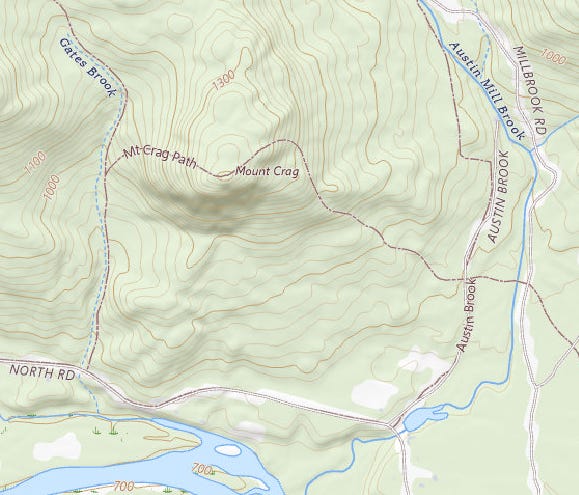
I suggested that we do the Mt. Crag loop in Shelburne, New Hampshire, a short, easy trail maintained by the Shelburne Trails Club. I had been up Mt. Crag a few times, but Rosemary never had. Mt. Crag is one of the hikes that delivers the highest “bang-for-your-buck” around, making it an ideal location for a casual dinner date. More importantly, for my purposes, however, the loop trail returns by way of the Gates Brook Trail, alongside the namesake brook.
Gates Brook is one of those “dotted line” brooks on the USGS maps, which is supposed to indicate an intermittent stream, although I suspect that this one at least trickles throughout most of the year. With the exception of a wider, flatter part just before it enters the Androscoggin, the USGS data shows the annual mean flow of most of Gates Brook as less than 1 cubic feet per second. Of all the brooks I did last year, I think only one of them, Lanes Brook, was quite this small, so I wasn’t sure how exciting it would be—or how easy it would be to find a place to fully submerge. The only way to find out for sure was going to be to actually go there and see for myself.
There were at least a couple of reasons to be more optimistic. For one thing, annual mean stream flow is just that, an average. This can obviously vary widely throughout the year, with the spring being the peak, and so, cold as they might be right now, this time of year is probably the best chance to get some of the smaller streams. Secondly, a low stream flow doesn’t necessarily translate to a lack of deep pools. There’s obviously a general tendency for those to correlate, but there are other factors. For example, this part of Gates Brook also has a 10.47% average slope, which is pretty steep. Steeper grades mean more water falls, which naturally carves more pools, some of which remain deep even when the amount of water flowing into and out of them is reduced.
In any case, Gates Brook is on the list, so it had to be attempted. My decision to concentrate, for now at least, on named bodies of water, occasionally feels a bit constraining. There doesn’t always seem, at first blush, to be a whole lot of rhyme or reason to which brooks have been given names and which have not. Obviously, the largest direct tributaries to the Androscoggin all have names, but beyond that you can find many unnamed branches that are several times larger than zillions of other Eponym Brooks. (I suppose I should just be glad there aren’t more named brooks; 532—at last count—is already a lot!) Of course, there is a reason and that reason is history. And, it turns out, the Gates name reveals quite a lot of it.
Holding Open the Gate
The 1861 map of Coos County has a C. Gates and a J. Gates living near this brook, while the 1892 New Hampshire Atlas has Miss S. A. Gates.
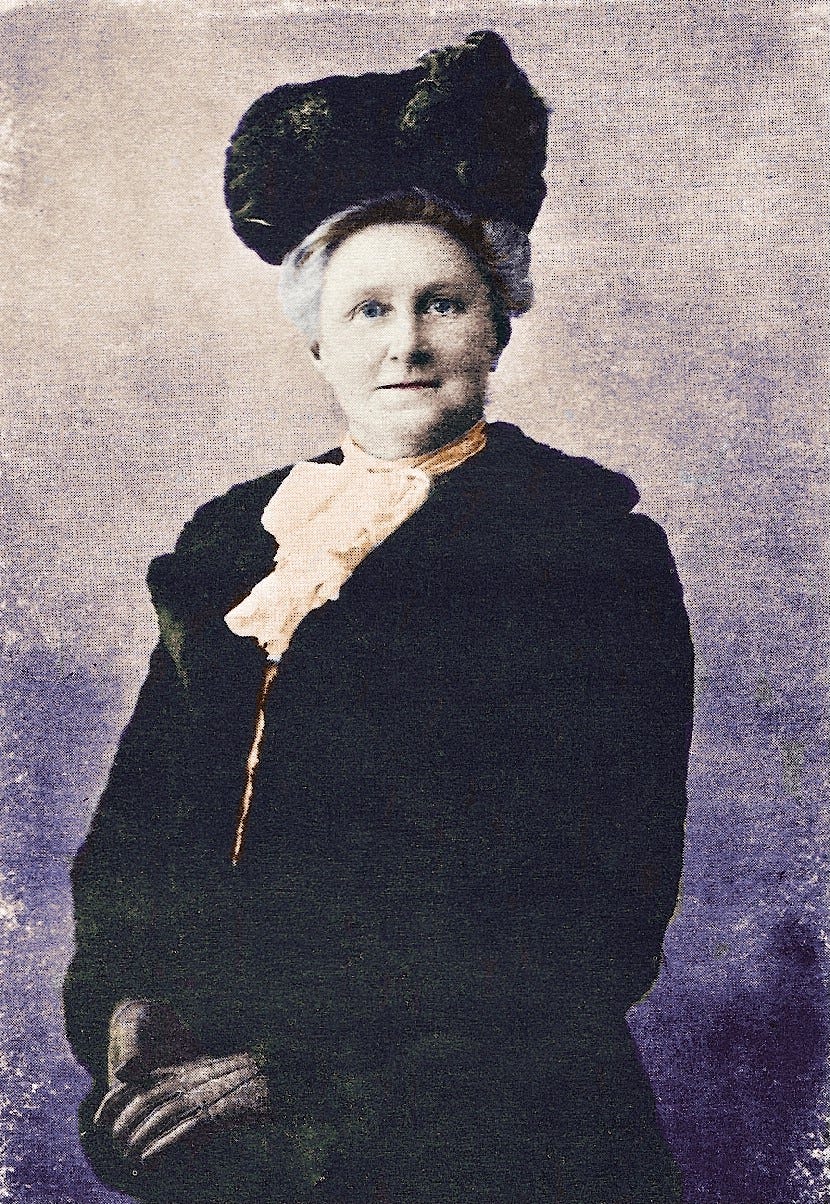
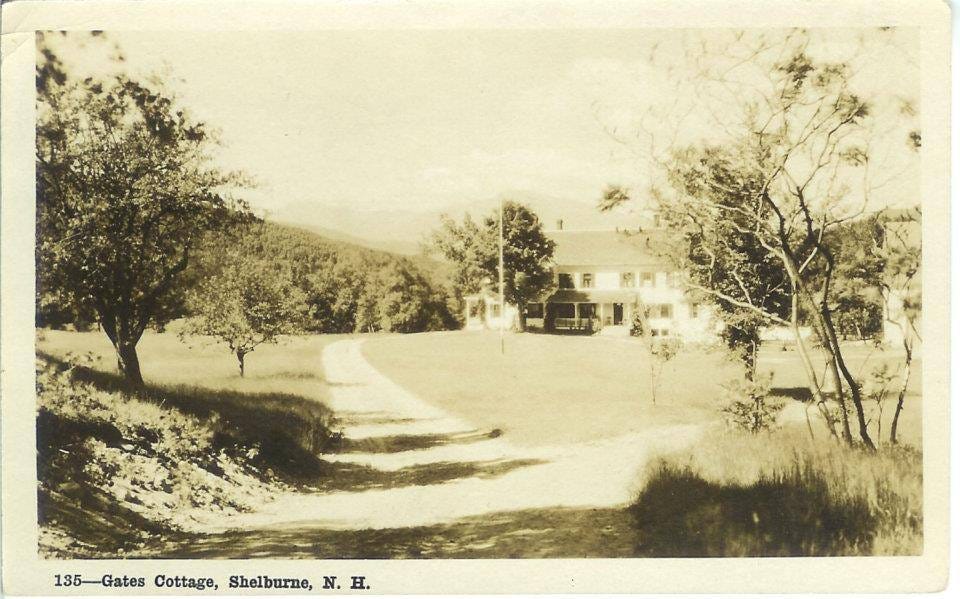
“J. Gates” is presumably Thomas J. Gates, an early white settler in Shelburne. As such, he is probably the individual for whom the brook was named. But it’s his daughter, Sarah A. Gates, or “Miss Gates,” who inherited the property, whose name I think most deserves to be commemorated. Miss Gates kept a summer hotel—a tourist home really, or what today we would call a B&B—the Gates Cottage. The 1917 edition of Chisholm’s White-Mountain Guide-Book by M. F. Sweetser lists the hotel as having a capacity of 25 and costing $2.00 per day.
Sarah A. Gates. Image shared by “New Hampshire-then and now” Facebook page.
The Facebook page “New Hampshire-then and now” posted an interesting story about Miss Gates’ generosity back in 2015:
This is H. B. Moller and his mother Mrs. Moller. Their little settlement in Shelburne, N.H. was talked about for years. In the woods and blocked by a fence for privacy. From 1901-1923 the Mollers spent their summers in Shelburne. H. B. Moller was in poor health and in need for something to do. Miss Sarah Gates who owned an Inn where the Mollers boarded told the Mollers that they could use any of the 200 acres at no charge. Off went H. B. to build his little village. H. B. built a small little church, Mother's private cabin, a cabin for H. B., dog houses, pigeon loft, general store, an open air restaurant, Grecian Temple of Music, [and] a tiny theater, 12 by 15 feet, which even had a ticket window. H. B. seems to be doing fine from what we can see in the photos.
Sadly, no trace of the odd little settlement apparently remains today:
H. [B]. and his mother left for a trip in Vermont in 1923 and never returned to Shelburne again. Seems during a violent storm in Vermont a falling tree fell on H. [B]. Moller and killed him instantly. Mrs. Moller could [never] bring herself to visit their village again. Soon came the curious crowds to see what was in those woods. They ruined the village. Many of the tiny furnishings were put away for safe keeping by Mrs. Gates...but most of their whereabouts are unknown today.
The Gates home and inn is gone as well. According to the “Shelburne New Hampshire” Facebook page, the cottage was abandoned for many years before being burned down by the Shelburne Fire Department for a training exercise.
Overcoming the Gatekeepers
There’s not a ton of other information available online about the Gates Cottage, but I found that there were several postcard views of it for sale, as well as a stereoview image taken by Bethel photographer Burnham, which, needless to say, I immediately had to purchase for the Museums of the Bethel Historical Society.1
But what really stands out is that something about the Gates Cottage—perhaps Miss Gates’ hospitality—seems to have made it a magnet for trailblazing women. Among Miss Gates’ guests were several who had to pass through the “narrow gate” to forge their own paths in male-dominated fields. This included Lucille and Marian Pychowska, the mother and daughter hiking duo, whom I have mentioned previously. Marian Pychowska’s notable feats include discovering and climbing down onto the ridge (or arête, as I’ve just learned it is properly called), now known as “The Pinnacle” at Huntington Ravine, astonishing president J. Raynor Edmands and other male leaders of the Appalachian Mountain Club.2 The Gates Cottage was a base of operations for the Pychowskas when exploring in Shelburne, writing some of the first descriptions of places such as Peabody Ravine, Giant Falls, and Bald Cap for Appalachia journal, and discovering and naming Gentian Pond.
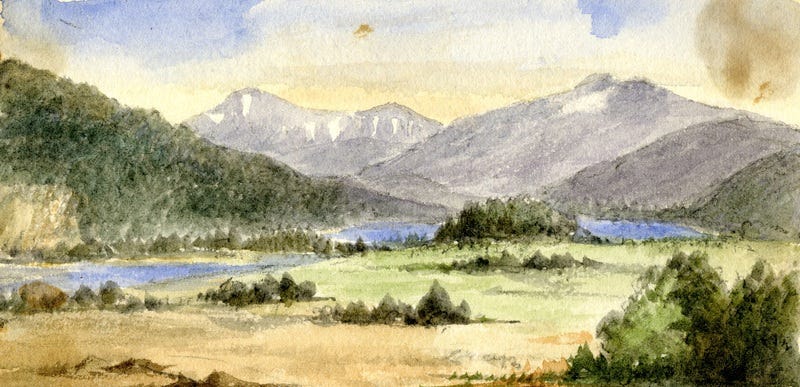
Another visitor to the Gates Cottage was the Portsmouth, New Hampshire, painter Sarah Haven Foster. The Portsmouth Public Library has a collection of over 1,000 watercolors by Foster, including one depicting the “View from Gates Cottage.” Foster was also a writer, publishing two books, Watchwords for Young Soldiers, a volume of children’s Bible stories published in 1864, and The Portsmouth Guide Book, published in 1876, the latter of which has earned her consideration as one of the pioneers of Portsmouth tourism.
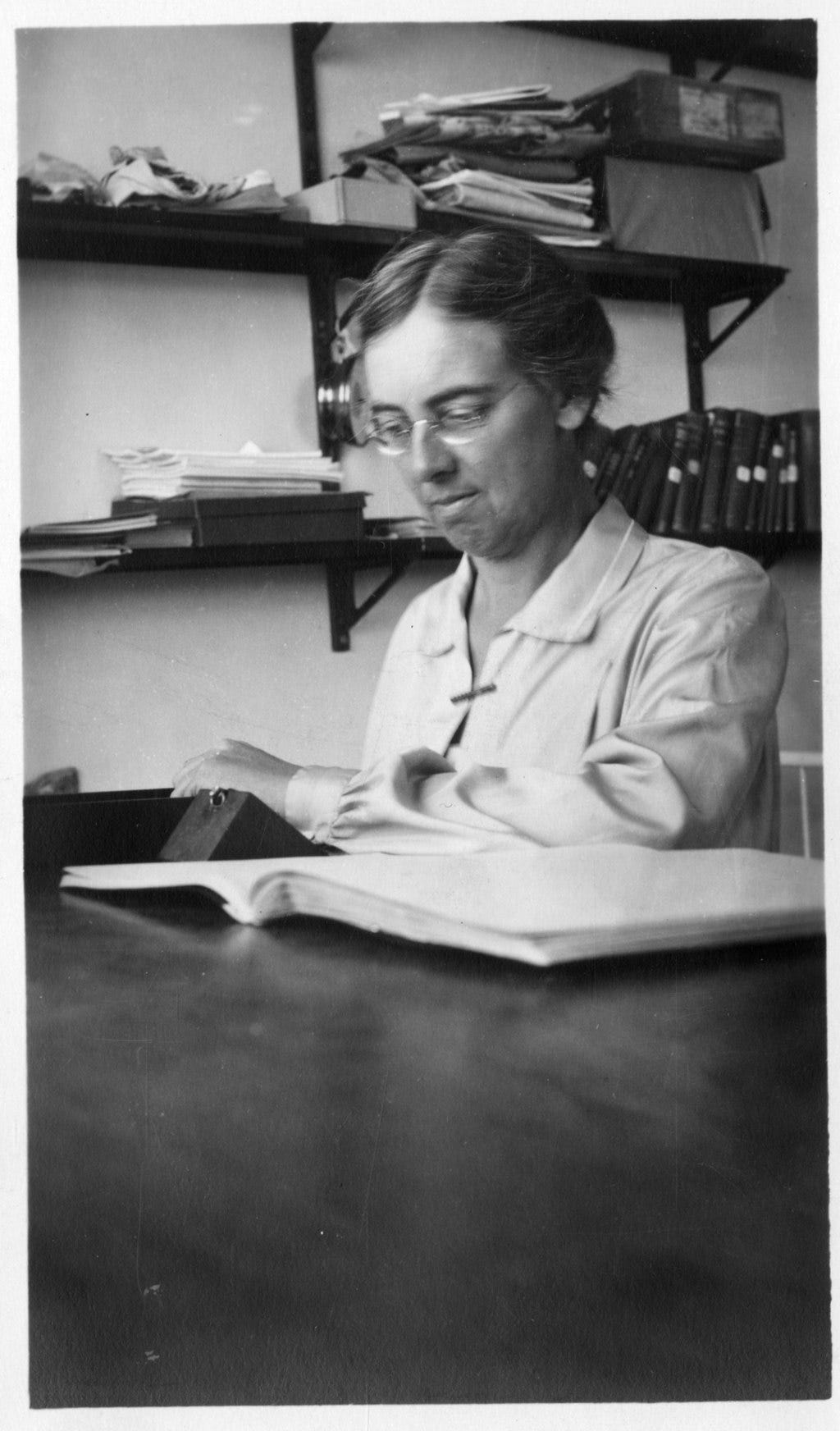
Also available online is a letter written by Abby Howe Turner, founder of the department of physiology at Mount Holyoke College, to her mother while Turner was staying at the Gates Cottage in August of 1919. Born in Nashua, New Hampshire, Turner received her B.A. from Mount Holyoke in 1896 and went on to study at the University of Pennsylvania, the University of Chicago, and Harvard Medical School, receiving her Ph.D. from Radcliffe College in 1926. After teaching at Holyoke for more than 40 years, Turner served for two years as acting head of the Physiology department at Wilson College.
Abby Howe Turner (1875-1957)
Turner was not blessed with favorable weather during this particular stay, but her letter offers us a few interesting peeks into life at the Gates Cottage:
Now I'm at Shelburne with time to write there is nothing to write about. I'm not sorry I came for the place is lovely, but I do miss Grace to do things with, and every day there are showers. Just now we have had a heavy one, and I would venture out for a little walk along the road, but it is nearly supper time and I wait on table tonight. Miss Gates' maids have gone and she can't get any one else except a woman who comes in during the middle of the day and serves at dinner. So the boarders take turns at waiting on table and helping with the dishes. I took today, and after this I shall feel as if I'd done my share. But I remember how good Miss Gates was to us when you were sick up here, and anyhow it isn't much to do. I don't feel in any danger of hurting my clothes.
These conditions might help explain the relatively low $2.00 board, which apparently compared favorably with the Ravine House:
Frances Botsford comes to Randolph tomorrow, and I wish I could be over there to go with her and her friend up a trail or two, but there doesn't seem to be any feasible way of getting over these miles between, and no place to stay over there except the Ravine House which is now 4.00 a day.
At Your Own Risk
Rosemary and I didn’t know any of this history as we drove into Shelburne that afternoon, but the village’s distinctive charm would be obvious to any outsider. The sun was shining brightly, and it promised to be a beautiful evening.
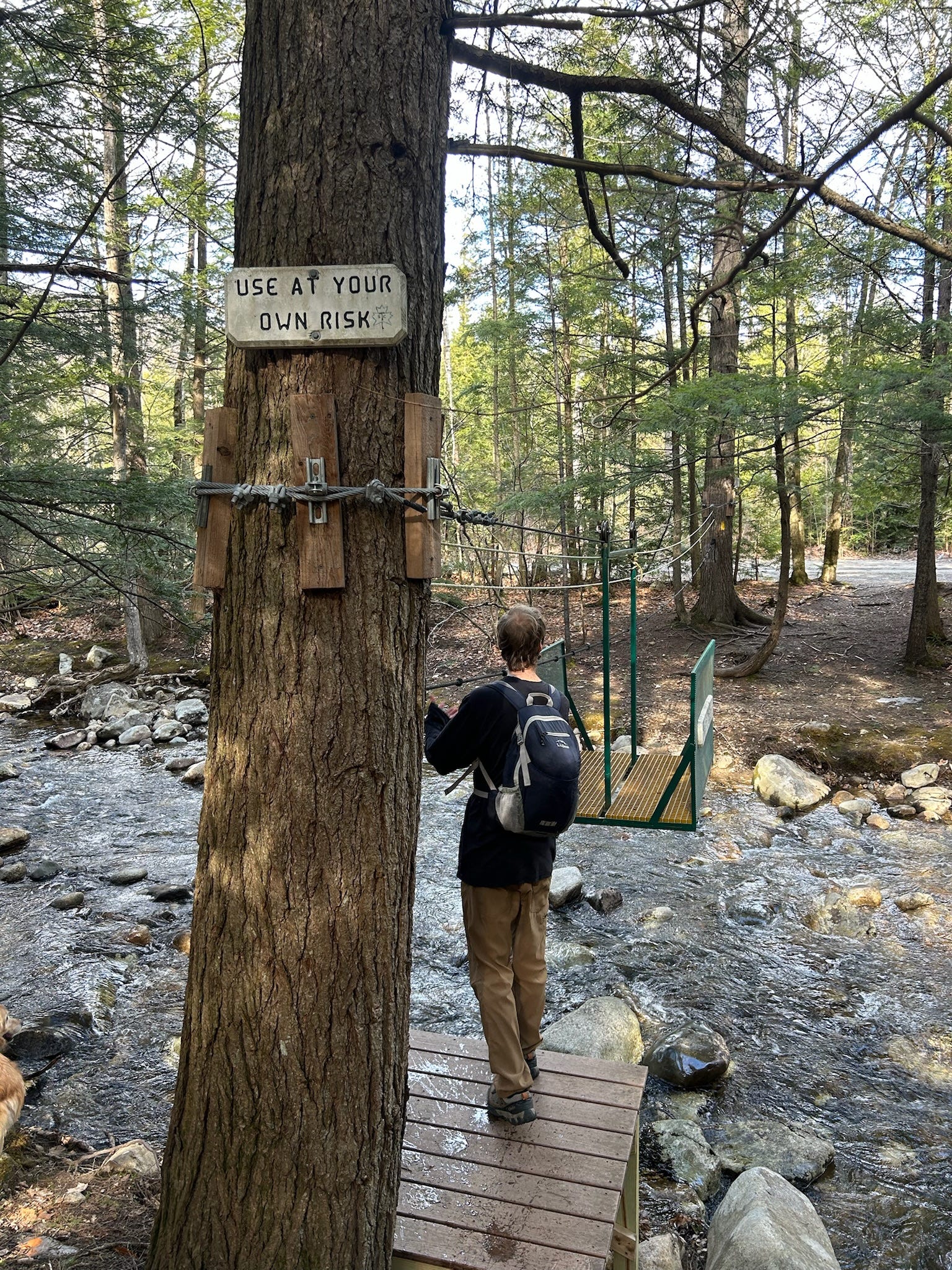
There are a few options for accessing Mt. Crag. There are two trailheads on the North Road at either end of the loop trail (which requires a short road walk to complete). Alternatively you can find a place to park on the dirt Mill Brook Road and then cross Austin Mill Brook (which is considerably larger than today’s target brook) in one of two places, one of which features a unique cable car.
It being mud season, we opted for the nearer of the two North Road trailheads, near the outlet of Austin Mill Brook. From here, you begin the hike by passing through an unusual wooden turnstile and then walk up an old road alongside the mill pond, until you intersect with the other trail.
If you go this way, you already start out on the Mt. Crag side of Austin Mill Brook. Nevertheless, we obviously had to start with a detour to the cable car. The last time I was in this area, a flood had knocked the platform down, so I was glad to see that a new one had been rebuilt. The wonderful folks at the Shelburne Trails Club do a great job of maintaining this often overlooked trail system.
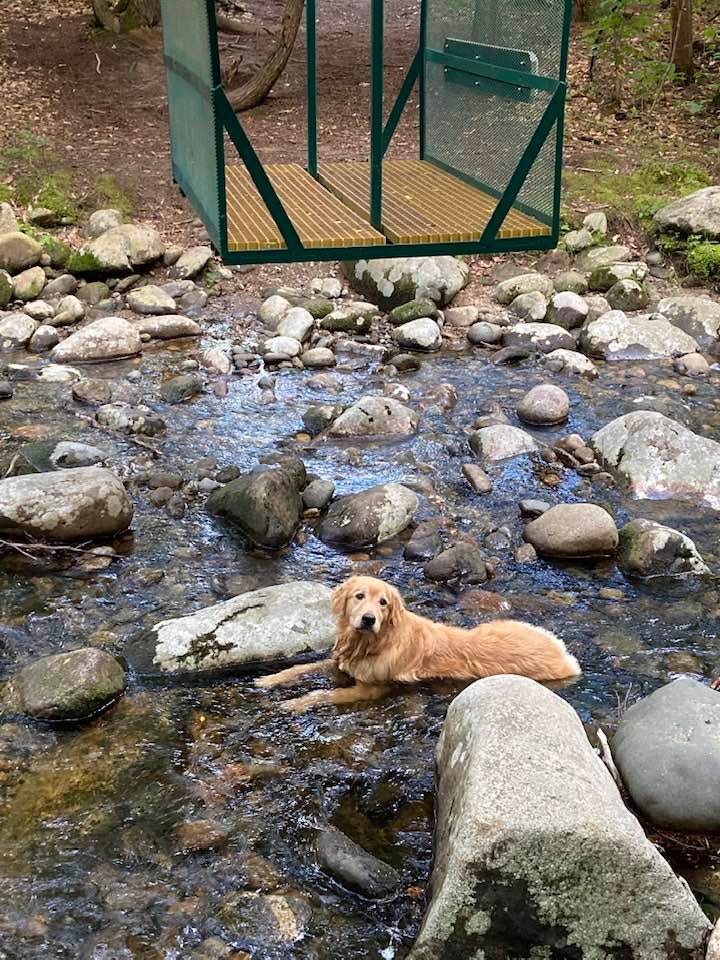
A few years ago, I was here with my parents and we found out that Dogs Don’t Like Cable Cars, when Eli bailed halfway through the ride across, leaping several feet down onto the rocks below, and wading across the rest of the brook, apparently unharmed.
August 28, 2022.
It was no surprise to learn that Dogs Still Don’t Like Cable Cars, and in fact, even though I was prepared to hang onto him more tightly this time, he refused to even set foot on the contraption.
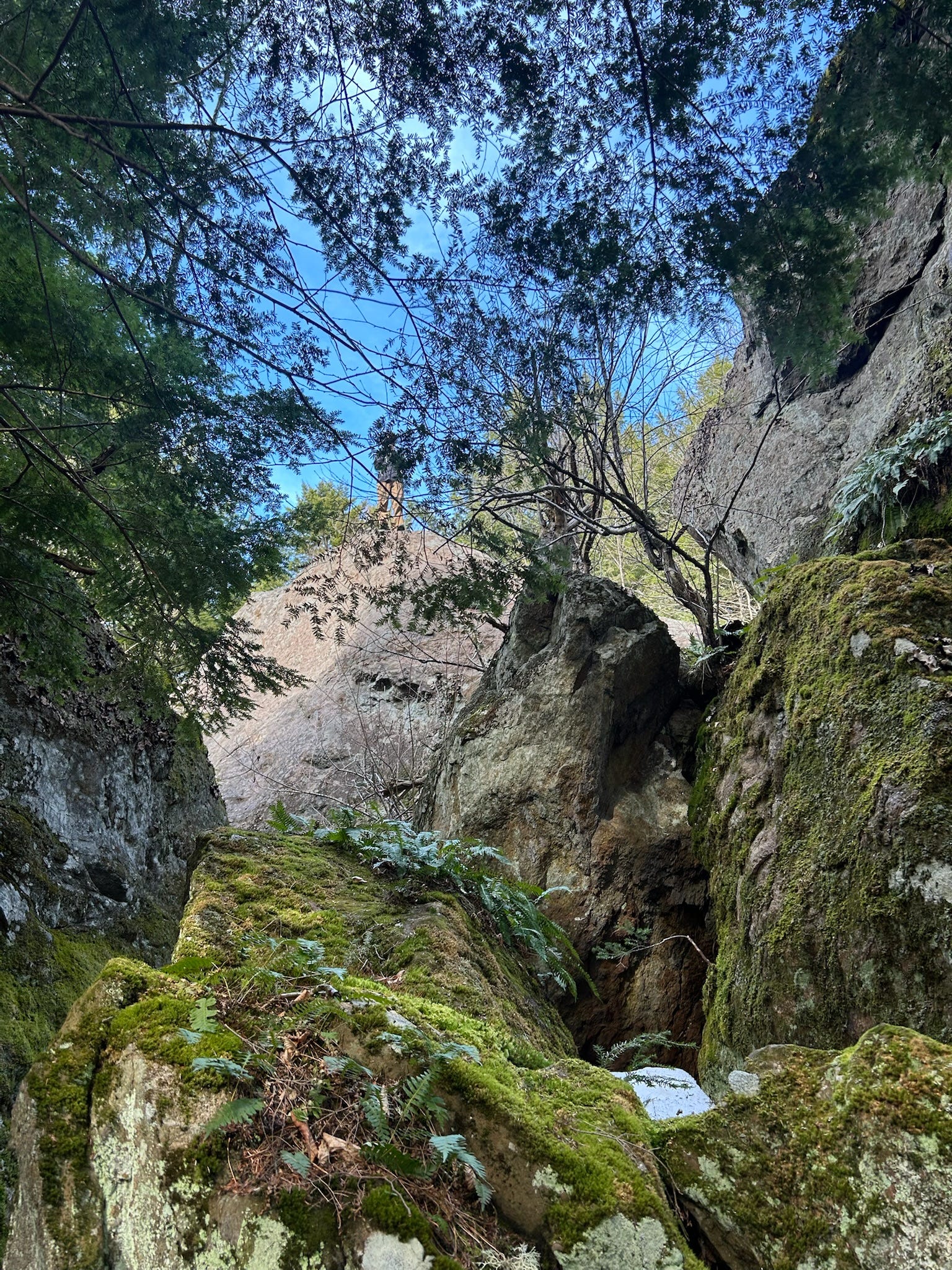
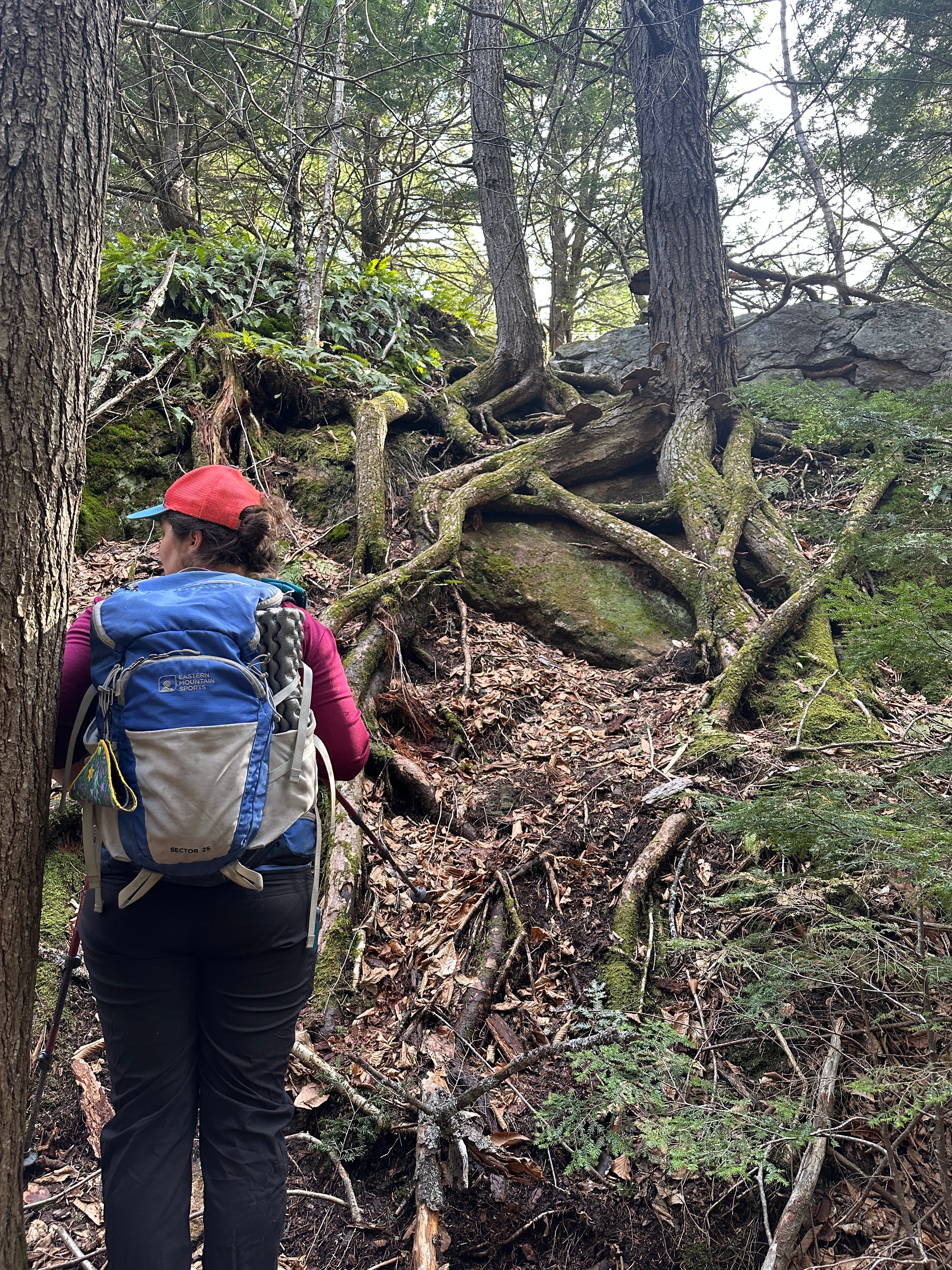
Back on the trail up to Mt. Crag, the next diversion was an impressively large boulder which is located just off the trail.
I think I’ve probably climbed this thing every time I’ve hiked this trail, but somehow I always forget it’s going to be there until I’m upon it.
By the time we were nearing the summit of Mt. Crag, more layers had been shed, and I was down to shorts and short sleeve hiking shirt.
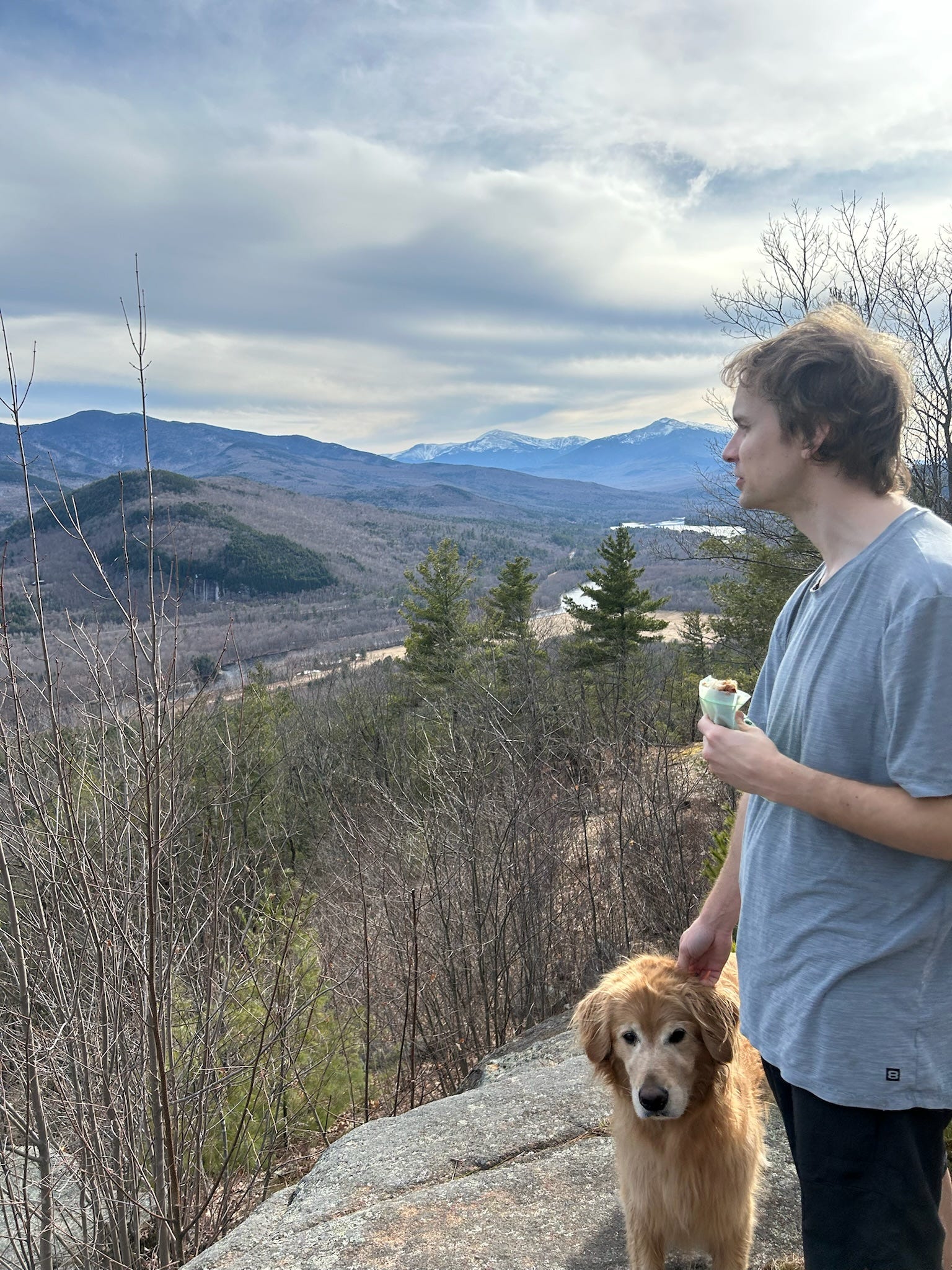
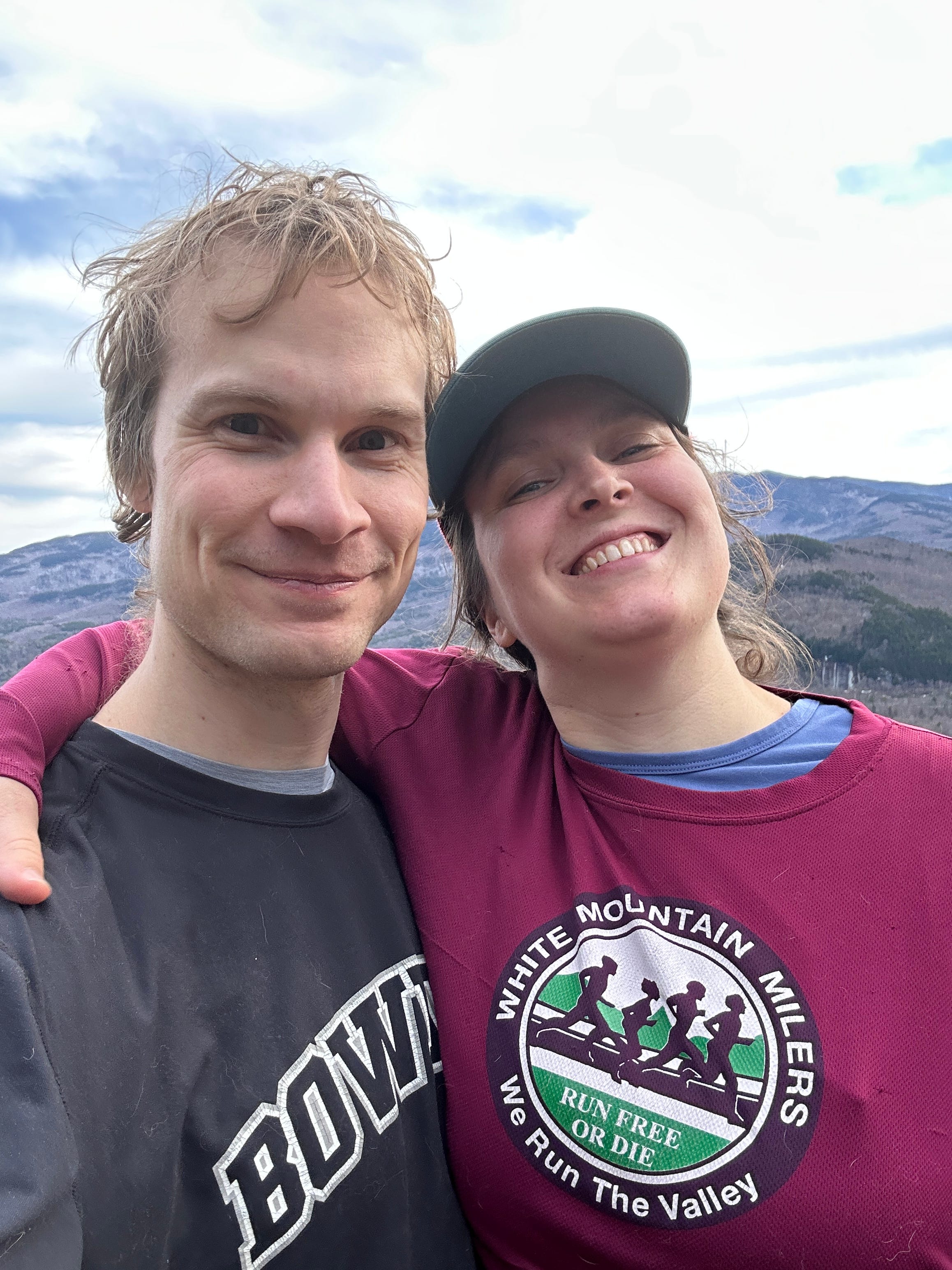
Up on the top we stopped to eat dinner (good ol’ PB&Js) and enjoy the view.
Unfortunately, during this time we spent on the top of Mt. Crag our sun disappeared behind a cloud.
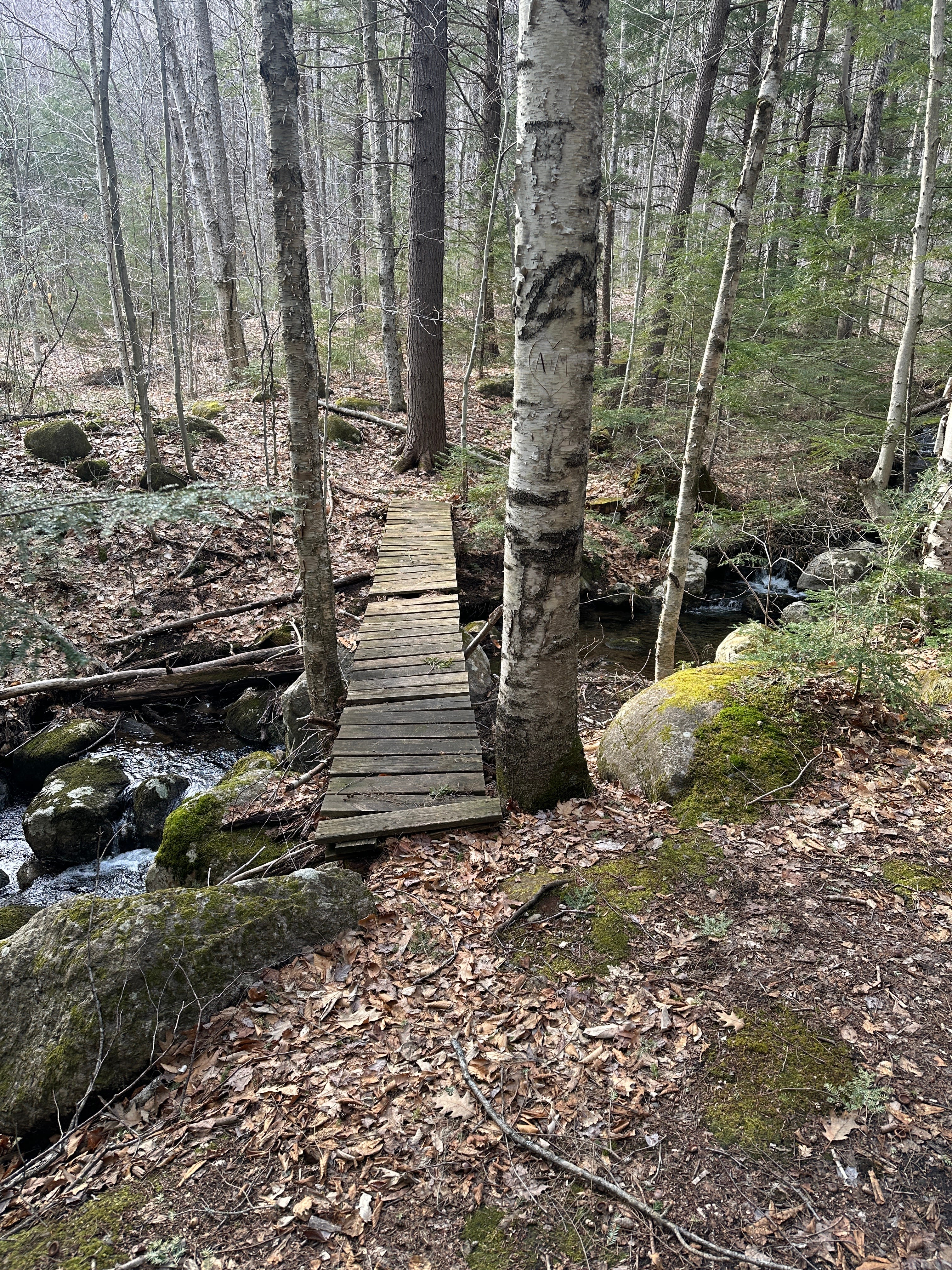
Most of my motivation to jump in a brook was now gone, but fortunately (?) my stubbornness always persists. When we actually reached the intersection of the trail, I found that Gates Brook was, as expected, quite small, but still flowing enough to give me hope. There’s a footbridge here that crosses over the brook and leads on to the top of Middle Mountain. I had gone over it once before, when my mom and I hiked a loop over Middle Mountain from Mill Brook Road, returning by way of this trail and then up over Mt. Crag.
Instead of crossing the bridge, however, we turned left, following the trail that parallels Gates Brook back toward the North Road. This section was all new to me. While Rosemary mostly stuck to the trail, I bushwhacked down beside the brook, taking photos and looking for a place to submerge.
It was Eli who finally found a spot, which was at least deep enough to lie down in, and I decided to follow suit(less).
“Whyyyyyyyy?,” Rosemary asked as I was toweling off. If I haven’t come up with a convincing answer to that question yet, I’m not sure I ever will.








Thanks for this. I may never make it there myself, but I feel as though I got a lot closer today. Nice combination of history and real-time adventure.
It's fun to vicariously climb, swim, travel with you. Thanks